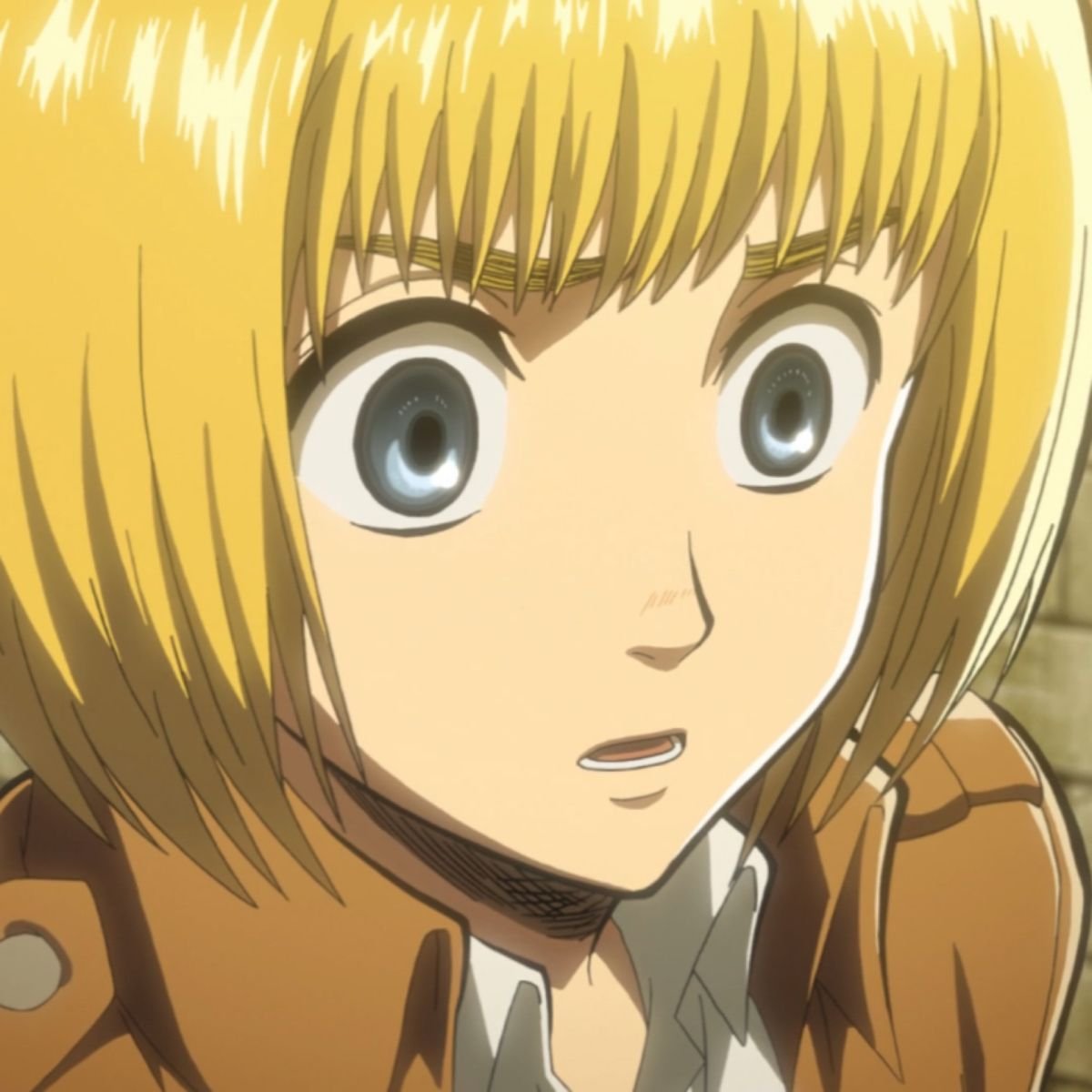
In the perilous world of Attack on Titan, few figures commanded respect and fear quite like Armin Arlert and Erwin Smith. These two titans of strategy, each in their own right, carved paths through impossible odds, leading humanity to its most significant victories—and its most heart-wrenching losses. But if their brilliant minds were pitted against each other, not in battle against Titans, but in a pure strategic contest, who would emerge victorious?
This isn't just a simple battle of wits; it's a deep dive into two distinct philosophies of leadership, sacrifice, and the very definition of humanity's future. Join us as we explore every facet of their genius, comparing their strengths, analyzing their methods, and ultimately, grappling with the question that keeps fans debating to this day.
The Minds Behind the Might: A Shared Foundation of Genius
Before we delve into their differences, it's crucial to acknowledge the profound similarities that connect Armin Arlert and Erwin Smith. Both rose to become commanders of the Survey Corps, holding the crushing weight of humanity's fate on their shoulders. Erwin, the visionary commander whose audacious gambles often defied logic, laid the groundwork for many of the Corps' future successes. Armin, who later inherited the mantle from Hange, proved to be an equally astute, albeit different, leader.
Their intelligence was undeniable. Erwin was a master tactician, capable of orchestrating complex maneuvers on the fly, often sacrificing pawns to win the game. Armin, on the other hand, was more of a brilliant detective, his analytical mind capable of piecing together fragmented clues to uncover the most elusive truths, such as the identities of the Female, Armored, and Colossal Titans. If you want to [dive deeper into their intellects and strategic minds], our dedicated analysis awaits.
Both men also carried the heavy burden of tragic pasts, shaped by the harsh realities of their world. Their parents were victims of the system, fueling a deeper drive within each of them. And in the crucible of the Battle of Shiganshina, both faced death head-on, sacrificing themselves for the greater good—Armin nearly incinerated by Bertholdt, and Erwin crushed by Zeke's onslaught. These shared experiences forged them into formidable, if morally complex, individuals.
Contrasting Commanders: Confidence, Risk, and Motivation
While their intelligence and command roles connect them, Armin and Erwin diverge significantly in their approach to leadership and life itself. Erwin was a man of unwavering confidence, a leader who could inspire his troops to charge to their deaths with a single, compelling speech. He was the ultimate risk-taker, exemplified by his final, suicidal charge against the Beast Titan to create an opening for Levi.
Armin, initially plagued by self-doubt and seeing himself as physically weak, grew into his role, his confidence slowly building with each strategic success. He is, by nature, more cautious than Erwin, meticulously weighing every option before making a move. To [explore Armin's unique strengths and vulnerabilities], you'll find a comprehensive breakdown of his character. Conversely, to truly [uncover Erwin's defining attributes and Achilles' heel], we have an in-depth look at what made him tick.
Their motivations also painted different pictures. Erwin was driven by a deep-seated desire to prove his father's theories and uncover the truth of their world, a quest tinged with guilt. Armin, however, was fueled by an innocent, almost childlike wonder and a burning desire to see the world beyond the walls—the oceans, the deserts, the marvels described in his forbidden book.
Pivotal Moments and Philosophical Divides
The most defining moment separating their fates, of course, was Levi's agonizing choice in Shiganshina. Presented with the option to save either a dying Erwin or a near-dead Armin with the Titan serum, Levi chose Armin. This decision led to Armin inheriting the Colossal Titan, fundamentally changing his trajectory and power. To [understand the pivotal moment Armin inherited the Colossal Titan], our guide lays out the full sequence of events and its implications. Meanwhile, for a raw, emotional account, you might want to [revisit the gut-wrenching decision and Erwin's ultimate sacrifice].
Their views on morality also stood in stark contrast. Erwin famously saw himself as a "devil" or a "bad person," willing to commit any atrocity, sacrifice any number of lives, for the singular goal of uncovering the truth. His ends always justified his means. Armin, particularly after becoming the Colossal Titan and facing the horrors of the world, developed a more nuanced, relativistic view, believing that "good" and "evil" were subjective and dependent on perspective. For a thorough exploration, [examine the complex moral compasses guiding both Armin and Erwin].
The Strategic Showdown: Who Holds the Edge?
So, who would win in a purely strategic contest? It's a question that demands a look at their individual leadership styles and their most impressive triumphs.
Erwin's Unrelenting Command
Erwin's leadership style was characterized by his iron will, his ability to inspire absolute loyalty, and his willingness to make impossible, often brutal, decisions for a higher purpose. He was a master of grand strategy, capable of envisioning multi-stage operations that unfolded over vast battlefields, even if it meant significant losses. To [dissect Erwin's relentless and often ruthless command], you'll gain insight into his methods. His greatest strategic triumphs often involved baiting the enemy, creating diversions, and leveraging his understanding of human—and Titan—psychology. You can [recount Erwin's most audacious and impactful tactical successes] in detail.
Armin's Analytical Brilliance
Armin, though less physically imposing, brought an unparalleled analytical depth to the table. His leadership, especially after becoming Commander, was more collaborative and empathetic, yet no less effective. He excelled at deduction, identifying patterns, and predicting enemy movements with uncanny accuracy. To [analyze Armin's unique approach to leadership], explore how his emotional intelligence blended with his strategic genius. His strategic triumphs often stemmed from his ability to see connections others missed, turning apparent disadvantages into decisive victories, like his pivotal role in identifying Marley's military capabilities. Delve into [the greatest strategic triumphs of Armin Arlert] to appreciate his intellectual prowess.
In a head-to-head scenario, Erwin might overwhelm with sheer audacity and force of will, forcing Armin into a defensive posture. However, Armin's ability to deconstruct complex situations, predict his opponent's moves, and adapt quickly could very well turn the tide. Erwin's unwavering conviction could be his strength, but also his blind spot; Armin might exploit it.
What if circumstances were different? What if the roles were reversed at Shiganshina? To [speculate on an alternate reality where Erwin lived as a Titan shifter], we ponder how his strategic might would have evolved with the power of the Colossal Titan.
The Enduring Legacy of Their Genius
Ultimately, both Armin Arlert and Erwin Smith are indelible figures in the tapestry of Attack on Titan. They represent two distinct, yet equally vital, forms of leadership and strategic genius that humanity desperately needed to survive. Erwin's sacrifices paved the way for Armin's generation to discover the truth and fight for a future. Armin's intelligence then guided that fight, often drawing on the lessons learned from Erwin's era.
Their debate isn't about one being definitively superior, but rather about the different forms intelligence and leadership can take when confronted with unimaginable challenges. Understanding both their shared foundations and their stark divergences enriches our appreciation for their individual contributions to the epic saga. As you continue your journey through the world of Attack on Titan, consider how these two commanders, through their lives and deaths, continue to shape the narrative and our understanding of what it truly means to lead.